
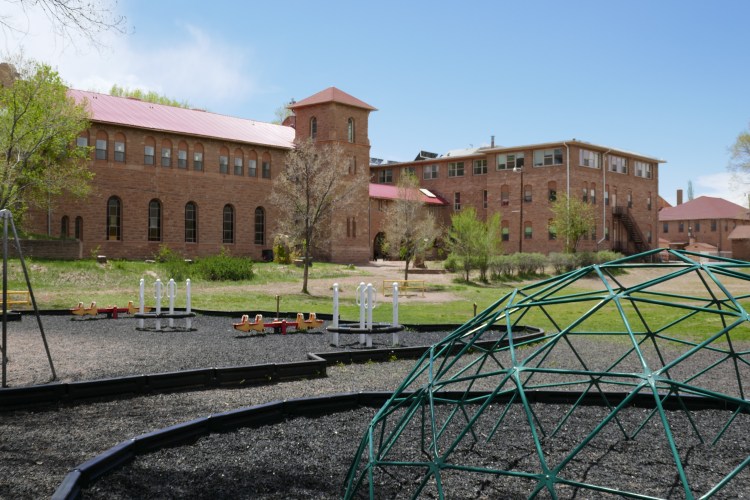
Saint Michael Indian School (SMIS) is a private Catholic school founded by Saint Katharine Drexel and the Sisters of the Blessed Sacrament (SBS) in 1902. Enrollment is about 450 students (mostly Navajo) from preschool thru 12th grade. https://stmichaelindianschool.org
The school campus occupies about 13 acres of the 440 acre parcel of land owned by the SBS. The property includes wetlands, two riparian corridors, pasture, rocky hillsides and pinion/juniper mesas rising 40 to 60 feet above the lower lands. All of the land has been impacted by the unmanaged grazing of horses and cows not owned by the school. The 13 acre campus area is now mostly secured from livestock.
Over the past 10 years, SEEDS has been developing an educational program at SMIS for land restoration, organic gardening and permaculture design. We are restoring the vitality, biodiversity and productivity of the land using permaculture techniques to:
- Reverse soil erosion on hillsides and slopes.
- Restore pastures and wetlands.
- Develop food producing gardens and orchards.
- Be an educational resource and model for the local community and the world.
Goals of the program include:
- Improve student physical health through gardening activities and eating more fresh fruits and vegetables (all organically produced).
- Grow a significant amount of the food served at school to become more self-reliant and reduce dependency on industrialized food production.
- Reconnect students, staff and families to Mother Earth and experience the healing power of this connection physically, mentally, emotionally and spiritually. This can improve student behavior, attitude, ability to focus, deal with stress, academic achievement and interest in school.
- Create opportunities to extend and apply curriculum in all subjects outdoors.
- Develop nature trails in the riparian corridors together with cleanup and restoration work.
- Construct a half-marathon cross-country trail designed to check soil erosion by diverting and ponding rainwater runoff along hillsides. The trail would also accommodate mountain bikes and horseback riding, and provide recreational opportunities for the community.
- Empower people to become an asset to our planet’s biosphere rather than a liability by redesigning the school to function more as an integral part of the natural environment.
- Establish a comprehensive composting, waste reduction, repurposing and recycling program with emphasis on eliminating waste before it happens (i.e. ban non-reusable water bottles and Styrofoam plates/trays.)
- Broaden our understanding of how the world works and how the results of our careless actions and habits create difficulties for people in other parts of the world and limit opportunities for people in our own community.
- Design and implement a more beautiful and inspiring landscape to complement the beautiful historic school buildings – integrating native plants to retain rainwater, build soil, prevent erosion, provide habitat for wildlife and traditional foods and medicine for people.
In 2011 SMIS received a grant through Northern Arizona University to install alternative energy systems in order to offset some of the school’s energy costs and to provide students with the opportunity to observe and learn about these systems. The systems included a wind turbine, a solar water heating system and a photovoltaic panel array for converting sunlight directly into electricity. SEEDS was invited by the high school principal to develop and present a high school level science course in “Applied Ecology” that would include the study of these systems in the curriculum for the 2012/2013 school year.
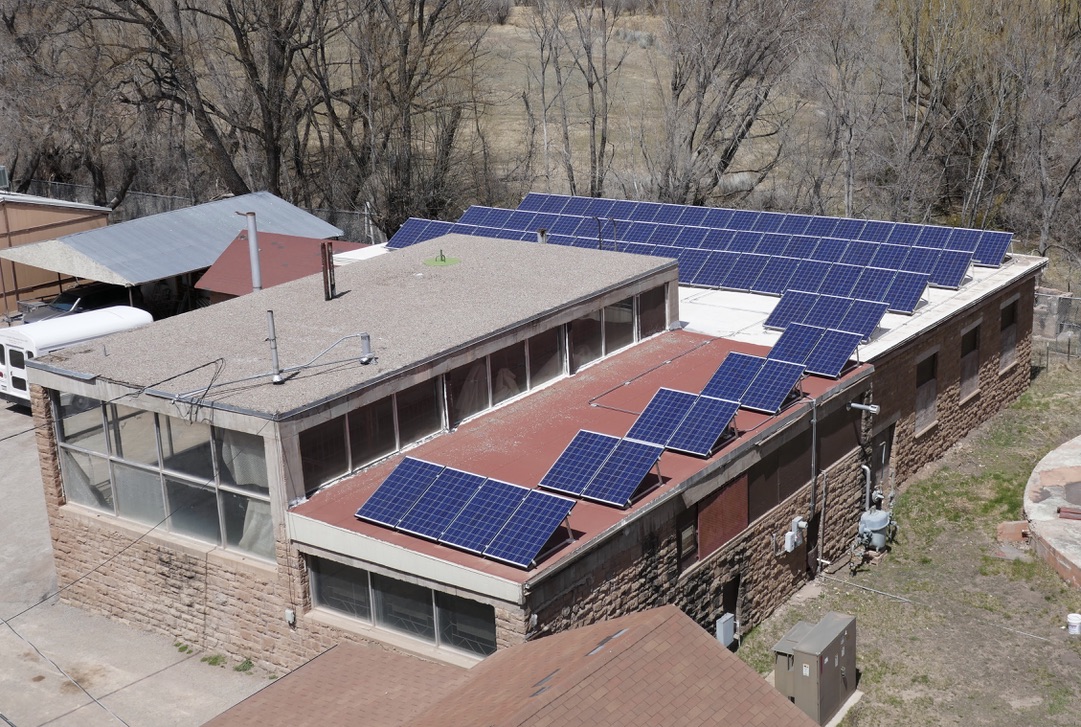
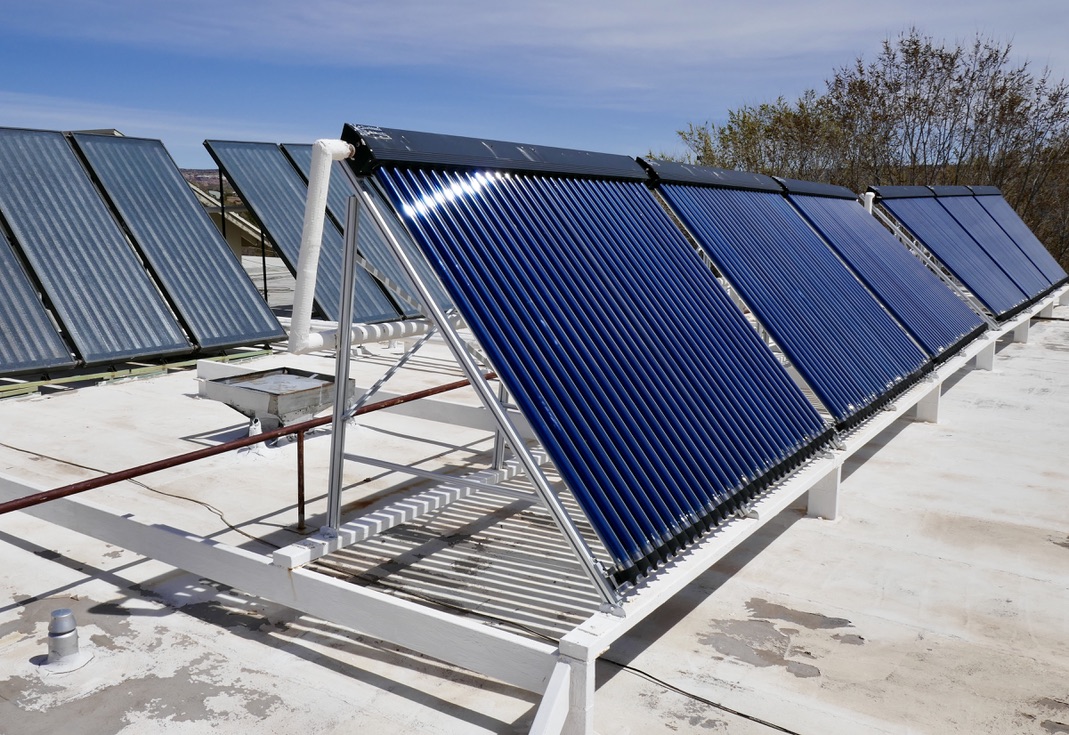

Photovoltaic array on maintenance building • solar water heating array on main building • wind turbine in high school parking lot – 2012
The course curriculum broadly posed the question; how can we re-imagine life as it is currently on the Navajo reservation, transitioning towards regenerative relationships within our local community, economy and Mother Earth?
In order to begin to answer this question we needed to introduce the concept of ecological literacy (ecoliteracy). https://www.ecoliteracy.org
Ecoliteracy is the ability to understand the natural systems that make life on earth possible, to understand how ecological communities are organized and to use this understanding in creating ecologically sustainable human communities. An ecologically literate society would not destroy the natural environment on which it depends. This is a new educational paradigm involving complex holistic systems thinking that creates a shift in our perception, prioritizing the protection of ecosystems as the biological imperative for our survival. Ecoliteracy will be a critical skill for leaders and professionals in all fields.
Students examined how ecological concepts such as interconnections, relationships and flows of materials and energy could be applied in the context of viewing SMIS as an ecosystem. Following the water, the waste, the energy and the money were key strategies for understanding the school’s economic/ecological systems and environmental and social impact.
The class mapped out the watersheds that flowed through the campus and began land-restoration work on a hillside near the main parking lot, constructing rock berms to catch runoff rainwater and check soil erosion. The berms were planted with several species of native trees and shrubs that are sources of food for people and wildlife.
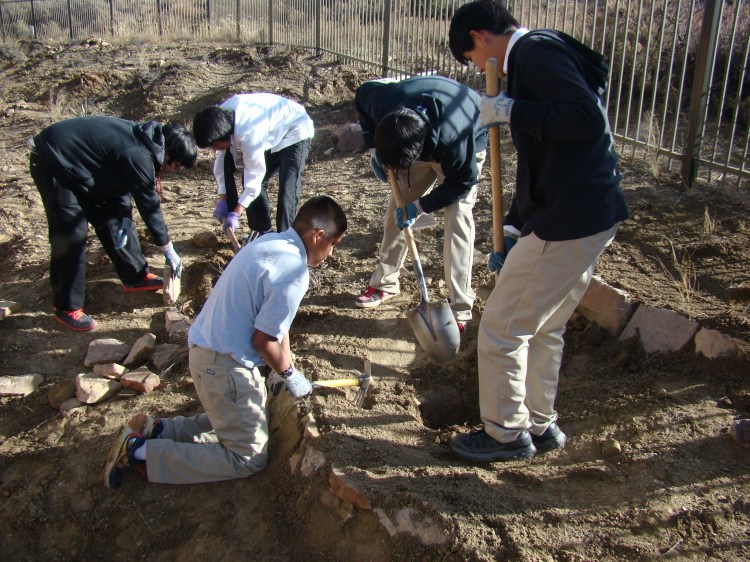
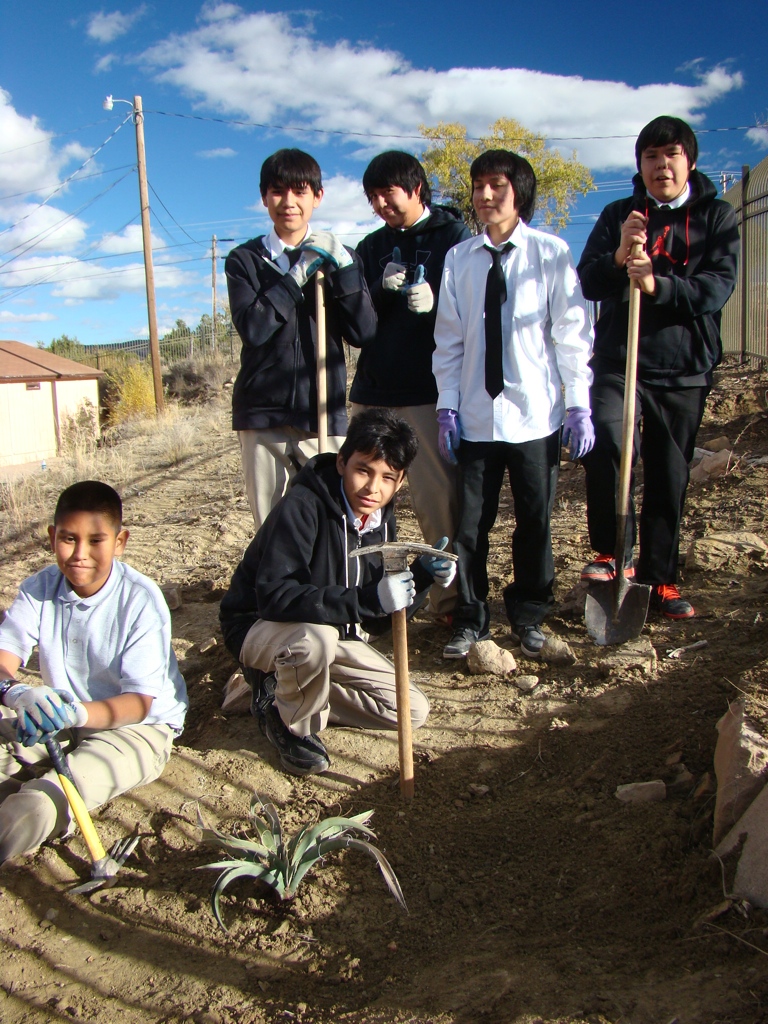
Sophomore students constructing hillside rock berms and planting banana yuccas – 2015
A nursery was set up at the high school to propagate the native perennial plants needed for this project. Some of the plants were started from seeds that were collected locally and others from rooted cuttings obtained from Colorado State University and the New Mexico Department of Forestry.

Visiting students from Telluride Mountain School learning about the native plant nursery – 2019
In the spring of 2013 work began to re-establish a food-producing garden located on a tall sandstone walled terrace between the gymnasium and the elementary school building. Students from all grades including kindergarten are participating in the ongoing development and expansion of this garden. Starter plants for the 2014 garden were produced by the greenhouse and garden program at the Episcopal church, Good Shepherd Mission in nearby Fort Defiance, Arizona
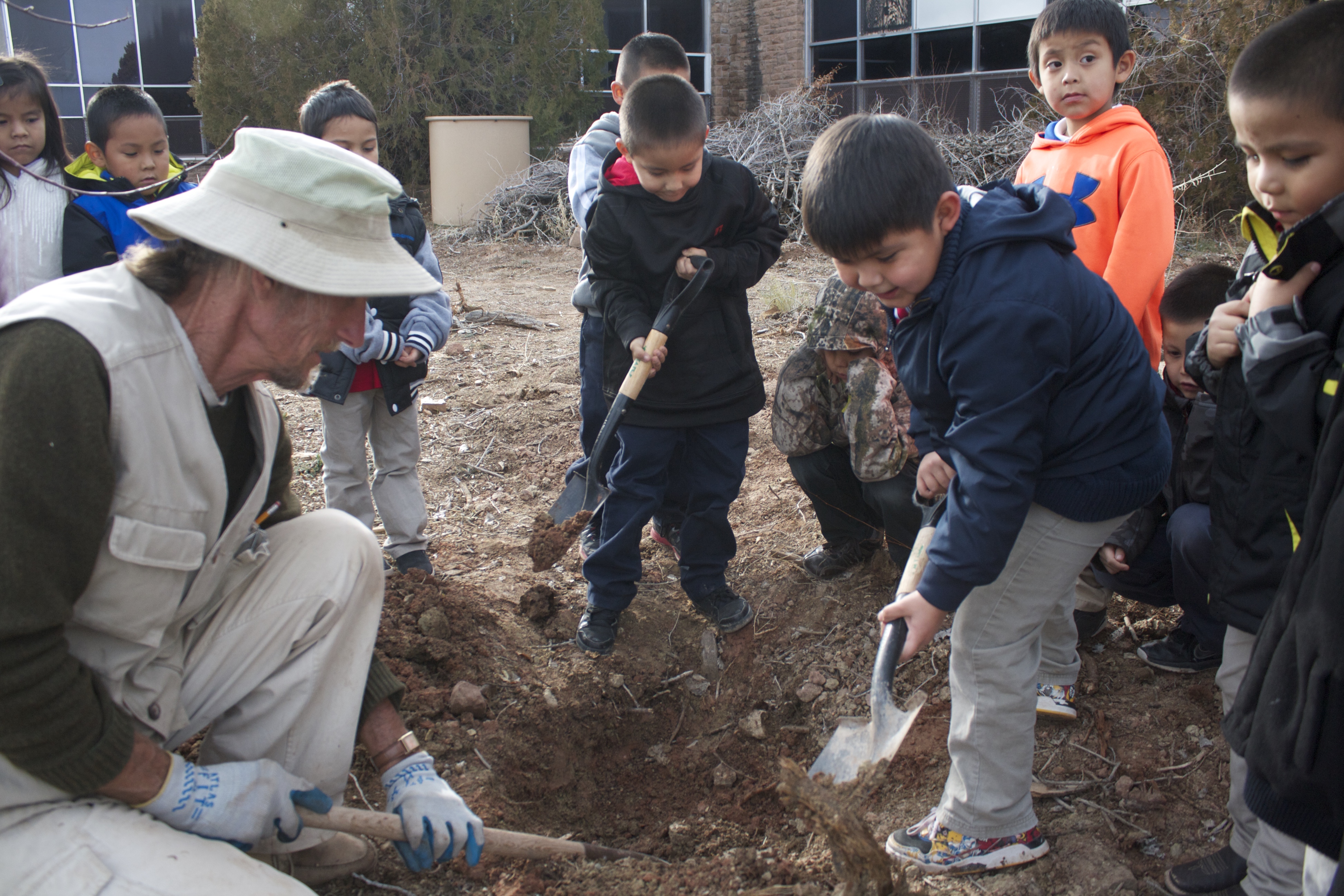
Summer 2014 – Volunteer youth groups from all over the country in partnership with Youthworks, a non-denominational Christian organization based in Minnesota, were a huge help in the removal of several large trees (cottonwood and Siberian elm) around campus that had become safety concerns to nearby buildings and people.
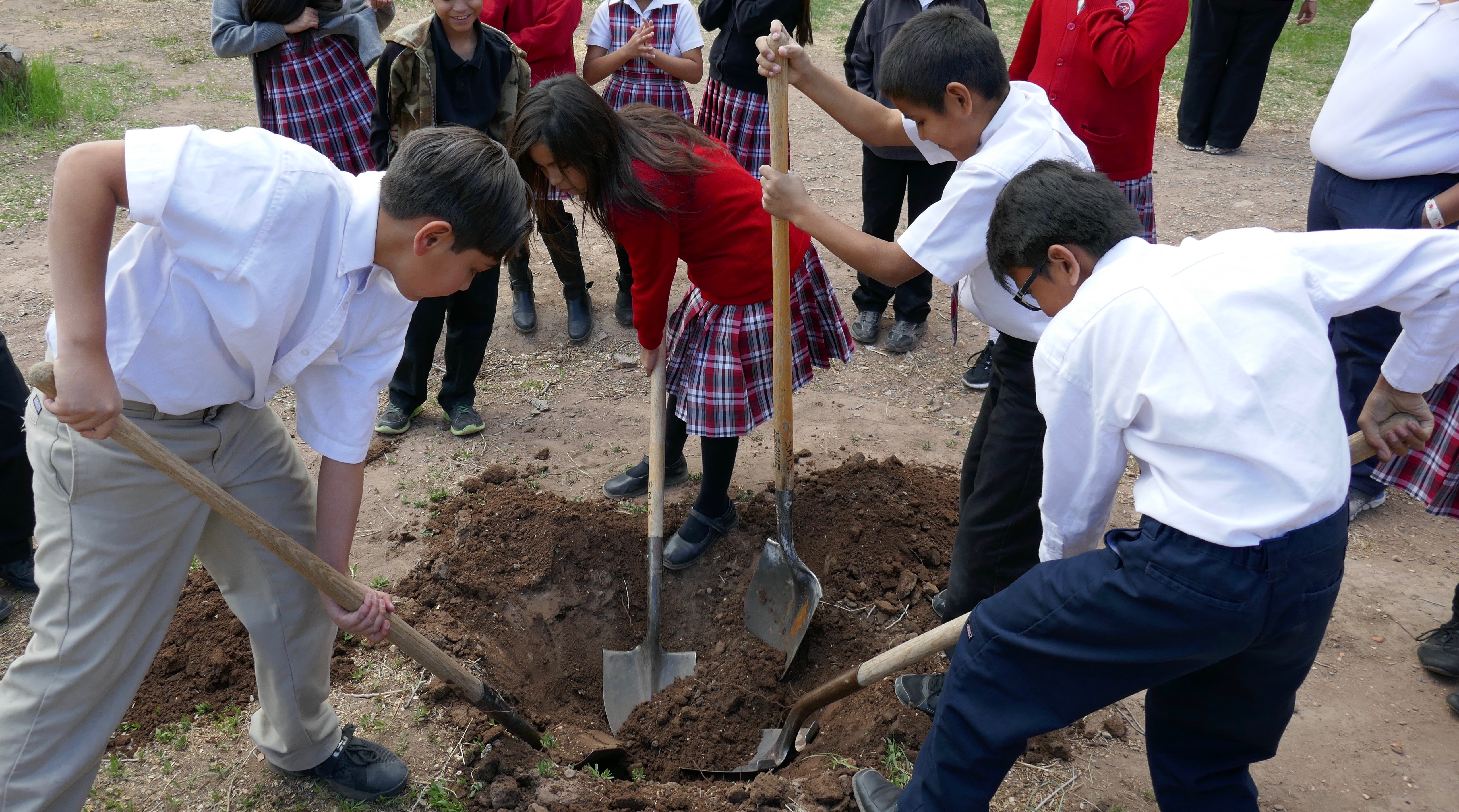
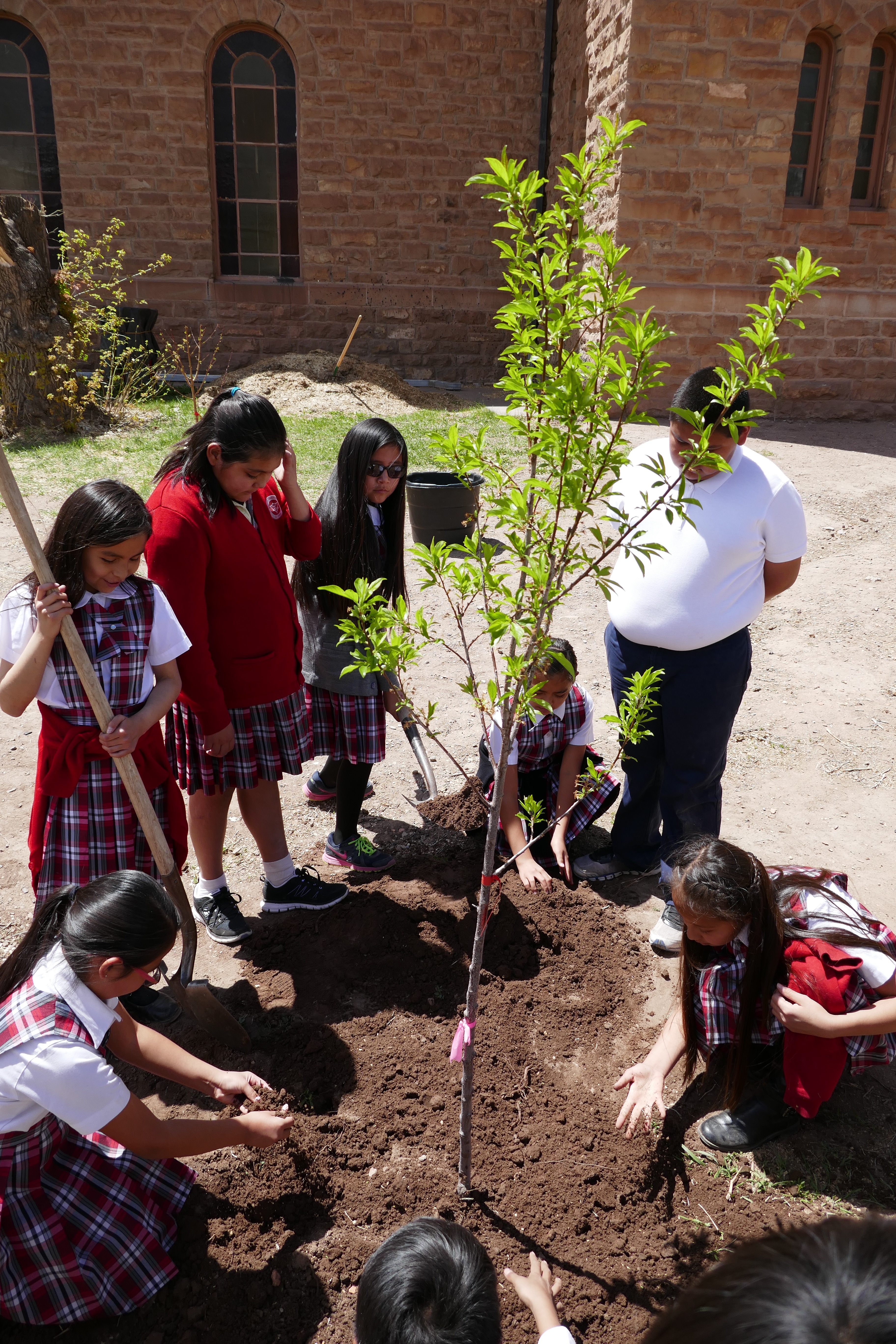
The removal of these trees opened up the space to plant fruit trees. Now, almost 100 fruit trees have been planted around campus over the past few years, with many beginning to bear fruit.

We are undertaking a terracing project to utilize rainwater falling on the main parking lot to provide water for native plantings and check soil erosion.
A passive solar greenhouse is in progress and is expected to be completed early next spring, hopefully in time for starting our summer garden seedlings.
 Sunrise Ecological Education & Design Services